Our Cyberoce Linux-based QR Code Access Control System deeply supports complex offline policies. Even without a network connection, the device can implement fine-grained schedule management, such as allowing employees to pass on weekdays and prohibiting entry on holidays, and verifying encrypted dynamic QR codes. This is a customization capability that microcontrollers cannot achieve.
Table of contents:
TEXT:
Today's analysis presents a real-world case: using a custom Linux system to enforce scheduled access to work areas, even when offline. This case clearly illustrates the fundamental differences between a Linux-based and a microcontroller-based
QR code access control terminal. We will further detail the custom capabilities our Linux solution enables, which are difficult or impossible to achieve with a traditional microcontroller.
First, let's clarify the distinction between Linux and microcontrollers access control. A Linux all-in-one device is a fully functional dedicated computer, while a microcontroller all-in-one device is an embedded controller with fixed functions. This fundamental difference leads to significant differences in their complexity, flexibility, scalability, and development models.
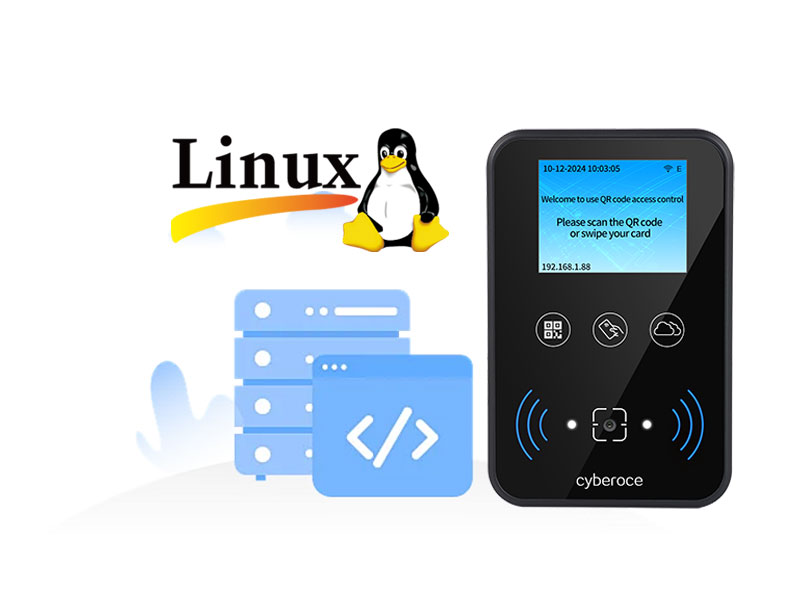
Our QR code access control system adopts the LINUX system. The QR code access control all- in-one device integrates the QR code access control card reader and access control controller into a single device, capable of directly controlling door locks or turnstiles. It supports TCP/IP communication, connects to the network via Ethernet or Wi-Fi, and offers HTTP /HTTPS and MQTT protocols. System integrators and software platform providers with development capabilities can perform secondary development and integration to interact with their system platforms, realizing functions such as remote door opening via access control and visitor appointment and other functions of access control system software.
1. Customer Requirements: QR code access control to be implemented offline without internet access.
On weekdays, employees are allowed to enter the work area by scanning a QR code from 9:00 to 19:59, but entry is prohibited from 20:00 to 08:59. Entry to the work area is not allowed on holidays.
2. Customize the QR code access control system schedule in the Linux system to enable offline door opening.
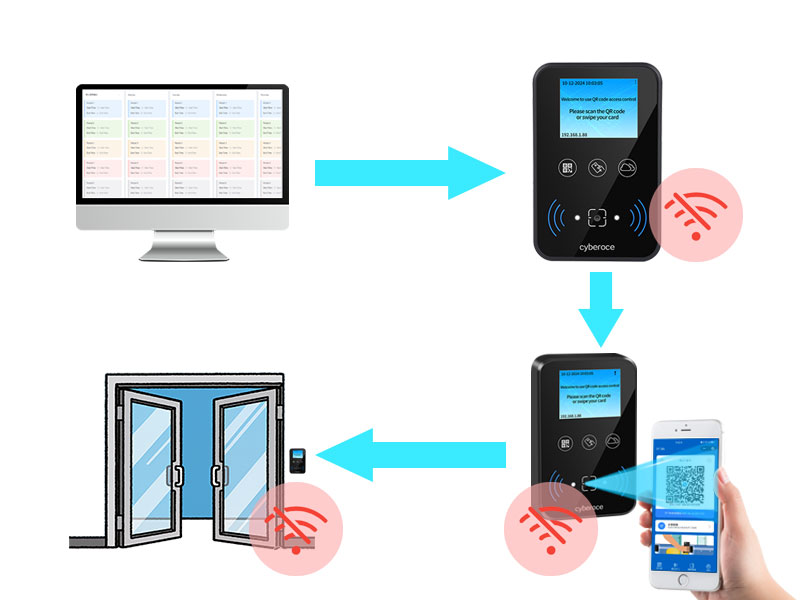
The technical team needs to configure the system as follows: set the time slots for regular statutory holidays provided by the client as "empty" (disabled), similarly disable weekend access, and configure the "start time" for Weekday "Time Slot 1" as 09:00 and the "end time" as 19:59 (as shown in the figure below).

The technical team needs to compile the complex time-based polices into a format that the QR code access control device can interpret and execute. The Linux devices have a complete file system and standard database support; we can easily store these data files into the device.
In offline statues, when the user scans the QR code, we use dynamic QR code technology. The QR code contains a dynamically generated credential based on timestamp and cryptographic key. The device uses the same key and algorithm for local verification, and simultaneously compares the time of the door-opening QR code with the hardware RTC (Real-Time Clock) to determine its validity. This allows the system to determine the request's validity—access is granted if the request complies with the time policy, and denied if it does not—all without requiring a server connection. This enables fully offline, schedule-based access control.
Limitation of Microcontroller-Based Solutions: Due to constraints in processing resources and logical complexity, implementing such sophisticated functions is both difficult to achieve and prone to instability.
If your project also has a similar offline implementation schedule feature, please search Cyberoce to contact official customer service for a solution, allowing you to directly implement the existing solution to quickly bring your project to fruition.
