Traditional access control systems often face issues such as delayed permission revocation and insufficient privacy protection. QR code access control allows permissions to automatically expire after a set validity period, enables rapid backend unbinding with full operation logs, and requires no biometric data collection. It complies with GDPR and other regulations, becoming a new trend in modern office building management.
Table of contents:
I. Risks in Offboarding Management: Traditional Access Permissions Are Difficult to Revoke Promptly
II. Access Control with QR Code: Faster Permission Revocation, Clearer Management, and Easy to Manage
III. Access Control with QR Codes Is More "Worry-Free" Regarding Privacy Protection
Text:
Moden Office Building Access Management is no longer as simple as “swipe a card to enter.” It is now deeply intertwined with corporate information security and employee privacy. In daily operations, whether managing employee departures or handling temporary access by employees and visitors, traditional access methods often fail to revoke permissions promptly. If the management cannot handle promptly, former employees or unauthorized individuals can still access office areas, posing significant security risks.
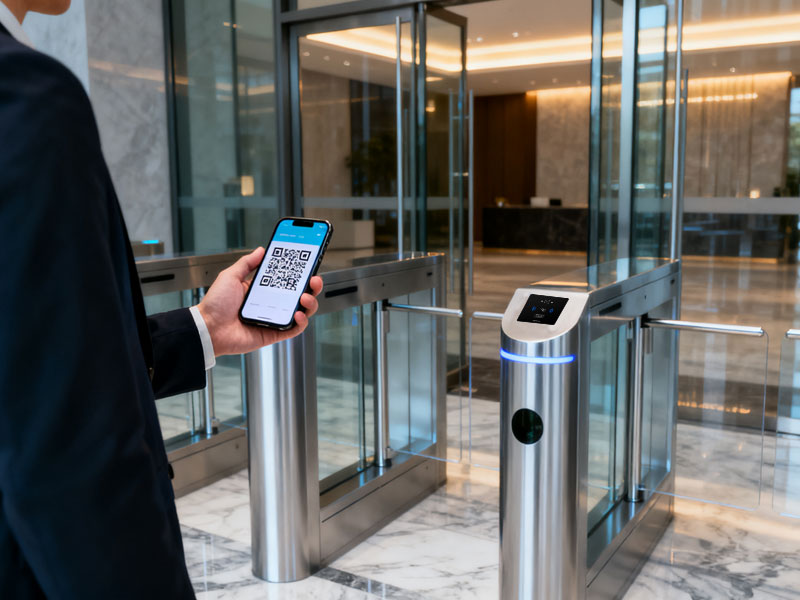
Due to these practical issues, many enterprises are adopting a
ccess control with QR code. Compared to access cards or fingerprint systems, QR code solutions relies on a mobile phone to issue and revoke permissions, making it more convenient and controllable. Next, we talk how this digital approach enhances security and compliance through three critical dimensions to describe how enterprise can use digital access control with QR Code, such as offboarding management, timely permission revocation, and privacy protection.
I. Risks in Offboarding Management: Traditional Access Permissions Are Difficult to Revoke Promptly
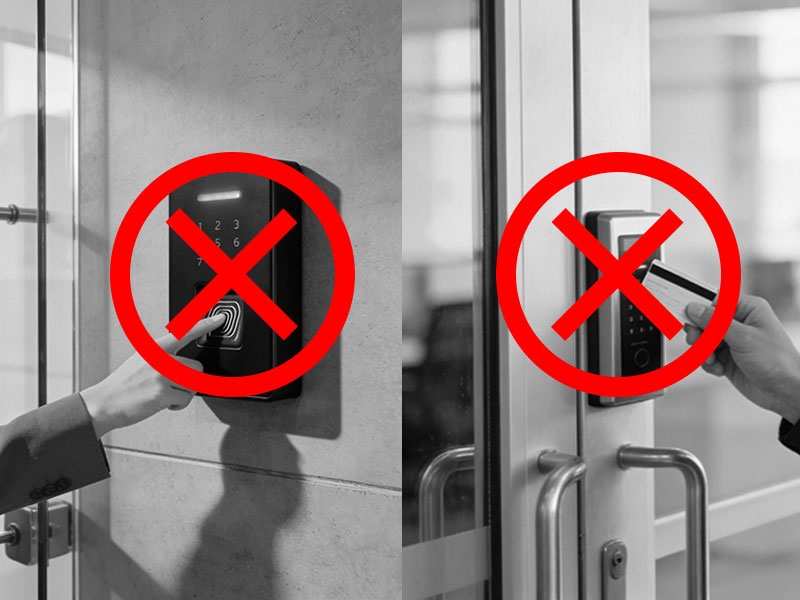
Traditional access methods, including physical cards, fingerprint recognition, and facial recognition, generally share a common issue: it is difficult to achieve immediate and complete deletion of permissions.
1. Physical Access Cards Cannot Be Timely Recovered or may be lost
When an employee leaves, companies usually require administrators to manually retrieve their access card. In practice. However, various issues often arise in reality: the employee forgets to return the card, loses it without timely reporting, or administrators fail to deactivate the associated permissions in time. One step missed, the former employee can still enter the office areas, posing a security risk to the company.
2. Biometric Permissions Are Not Easy to Physically “Retrieve”
While fingerprints and facial recognition are convenient to use, but biometric systems collect highly sensitive personal data. Upon an employee’s departure, it is often confirmed whether such sensitive data has been fully and permanently erased from the system.
II. Access Control with QR Code: Faster Permission Revocation, Clearer Management, and Easy to Manage
Digital access control is becoming the standard for office buildings and enterprises. Its flexibility and controllability in permission management make security management and compliance operations simpler.
1. QR Codes Can Be Set with an Expiry Date, Expiring Automatically
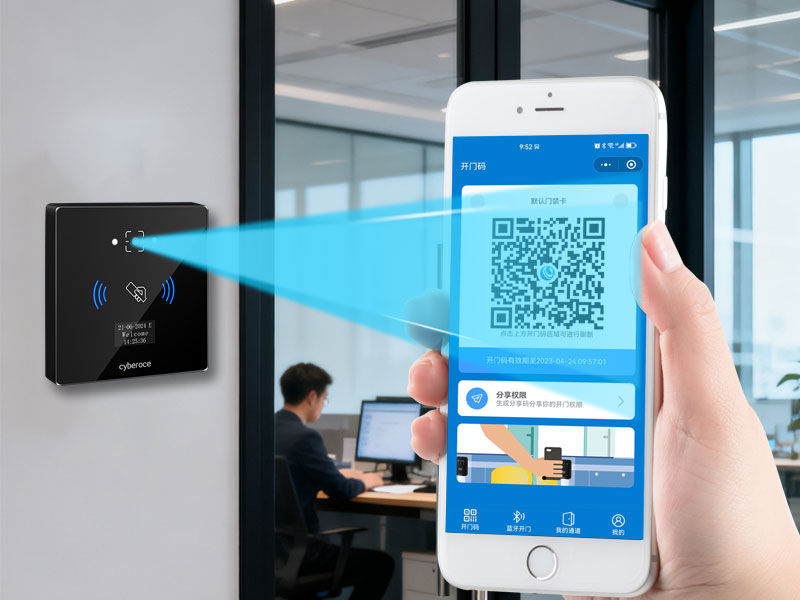
QR code authorization can be set with a valid time, or dynamically updated and restricted to single use as needed. Even if the administrator does not immediately revoke the permission, it will automatically become invalid upon expiration, fundamentally reducing the risk caused by lingering permissions.
2. Instant revocation via centralized backend
Unlike traditional access systems that require the collection of physical cards or the individual deletion of fingerprints, QR code access only requires a single operation in the backend to instantly invalidate the permission, immediately unbinding the employee's identity from the spatial access rights. The entire process is simple and direct.
3. Backend System Records All Permission Operations, Available for Review Anytime
The system automatically logs every instance of authorization, revocation, and usage. Whether for internal management needs or in response to compliance audits, companies can access a complete operational history at any time, which is something traditional access systems struggle to achieve.
Due to these practical advantages, more office buildings, companies, and access control manufacturers are beginning to access control with QR code, taking access management to the next level in both security and efficiency.
III. Access Control with QR Codes Is More "Worry-Free" Regarding Privacy Protection
Information like fingerprints and facial data is legally classified as sensitive personal data, imposing higher requirements for its collection, storage, and deletion. Access control with QR code does not involve the collection of biometric features; authorization is completed simply by linking non-sensitive data such as mobile phone IDs or user IDs. Users retain control over their access terminal, reducing the potential for data misuse. Furthermore, QR codes have a short usage cycle and can be automatically destroyed, preventing the accumulation of personal information.
This means QR code access is easier to pass internal information security reviews, better suited for rapid deployment in large-scale enterprises, and more aligned with current global privacy protection trends.
Conclusion
QR Code Access Control Is the Future of Secure and Compliant Office Management
QR code access is an inevitable trend for office building security and compliance management, providing companies with an "instant, controllable, and privacy-friendly" permission management model. It not only reduces the security risks associated with departure management but also meets compliance requirements, further enhancing the overall security level of the office building.
If you would like to explore a completely solution for enterprise access management and temporary visitor entry, such as detailed, actionable implementation guides for QR code access systems—please search for “Cyberoce” and contact our official customer service.
