QR code access control reshapes laboratory management in overseas universities: Through open interfaces and air authorization, mobile phones can be used as keys, with limited time and limited number, perfectly solving pain points such as large personnel flow and cumbersome temporary authorization. The hardware with IPX7 waterproof,supports secondary development and provides ODM/OEM solutions for system integrators to assist in the digital upgrade of laboratories.
Table of contents:
TEXT:
In the wave of digital transformation in global universities, the application of access control systems has become quite popular in overseas university laboratory environments with strict requirements for security and management. However, traditional card access still accounts for 40% of the market share. Compared with traditional access control,
QR code access control has more flexible, intelligent, and efficient solutions in terms of frequent personnel turnover, temporary authorization, and appointment.
I、 The dilemma of overseas university laboratories not using QR code access control management
The use of traditional access control security management in overseas university laboratories presents a high degree of complexity, and its difficulties mainly dilemmafrom the following three aspects:
1. Diversity of user groups: A typical university laboratory has an extremely complex user composition. There are long-term professors and researchers, postdoctoral and graduate students with periodic projects, undergraduate students rotating by semester, and visiting scholars who visit for weeks or months. In addition, temporary visitors such as equipment maintenance engineers and safety inspectors also need to frequently enter and exit. What is even more serious is the phenomenon of "friendship card swiping", where students borrow cards between each other at will, making access control records virtually non-existent and unable to be accurately traced. Configuring and managing access control permissions for such a diverse population is itself a daunting task.
2. Traditional card swiping access control often encounters: physical cards are lost or stolen, resulting in high turnover rates of laboratory personnel every year due to student graduation, course completion, and research project changes. Traditional card swiping access control exposes the production, distribution, retrieval, loss reporting, and permission changes of cards in this situation, which increases the workload undoubtedly of administrative personnel. A student card that is not collected or reported lost in a timely manner may become a potential security vulnerability.
3. The application of biometric access control is limited.
In some high security laboratories, facial or fingerprint recognition systems are used, but their application scope is limited due to high costs, susceptibility to environmental influences, especially in biological, chemical, and medical laboratories where there is a risk of cross contamination from contact based fingerprint recognition, and be limited by privacy regulations such as the EU GDPR.
II、QR code access control: tailor-made "phone key" for university laboratories
As a manufacturer of QR code smart door lock china, we not only provide a door opening tool, but also a smart laboratory access control core hardware that can deeply empower system integrators, support secondary development, and seamlessly integrate with its software platform, thus completely solving the above pain points. The reason why QR code access control can become an ideal choice for university laboratories is reflected in the following aspects:
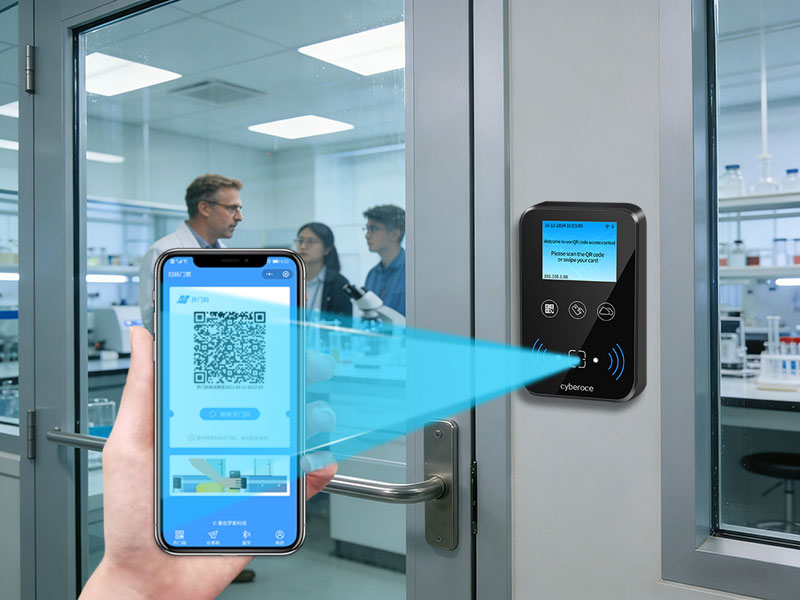
1. Seamless integration with any third-party software platform:
Our company provides HTTP/HTTS and MQTT protocols for system integrators and software platform providers with development capabilities, and arranges technical one-on-one assistance to develop a powerful visitor reservation and authorization system.
For example, a visitor as professor only needs to submit an application through email or mobile application before visiting. After the laboratory administrator reviews it, the system will automatically generate an encrypted dynamic QR code containing specific permissions (for example, limited to the laboratory in Building A of Building 3, valid from 9am to 5pm next Monday to Friday) and send it to their mobile phone. Visitors can use this code to pass "without feeling", without the need for manual intervention or the issuance of physical cards throughout the process. After the permission expires, the QR code will automatically become invalid, which is safe and efficient.
2. Say goodbye to physical cards, your phone is your key
QR code access control uses mobile apps or web pages to generate door opening QR code access control. By turning the phone into a "digital ID card", the phone becomes a key. Mobile phones have become an indispensable item in modern life, and there will no longer be situations where doors cannot be opened due to losing or forgetting the access card. At the same time, it can help laboratories save a lot of costs for purchasing, making, and replacing physical cards, reducing the cost and maintenance difficulty of access control management in universities.
3. Zero contact access:
The non-contact feature of QR code access control fundamentally solves the contradiction between hygiene and convenience. Researchers only need to seek out their personal dynamic QR code on their mobile phones and scan it before reading. The entire process does not require the removal of gloves or physical contact with equipment, minimizing the risk of cross contamination, ensuring the cleanliness of the laboratory, and improving traffic efficiency.
4. Air authorization, decentralized management:
QR code access control can achieve cardless air authorization. Based on the different door opening needs of teachers, students, temporary visitors and other personnel, They no need to travel back and forth to the management center. Instead, administrator can generate exclusive QR code authorization credentials through a mobile app or cloud management system, achieving "air authorization and instant effectiveness" (this process is called "decentralized" management). No matter where the management personnel are, they can quickly complete remote authorization.
5. Anti copy and anti screenshot:
Unlike static RFID cards that are easily copied, advanced QR code access control systems use dynamic encryption technology of "one code, one use" and "one matter, one code". The QR code automatically refreshes every 5 seconds and synchronizes with the server time, effectively eliminating the risk of copying and stealing through screenshots, photos, and other methods, providing high-level security protection for valuable assets and data in the laboratory.
6. Integration with video surveillance system:
Every time the QR code is scanned to open the door, the system automatically links with the nearest camera for capture, and binds the image with the information of the person who opened the door, forming an undeniable and illustrated traffic log, providing the strongest evidence for security auditing and event tracing.
III、University laboratory access control management, starting from QR code access control
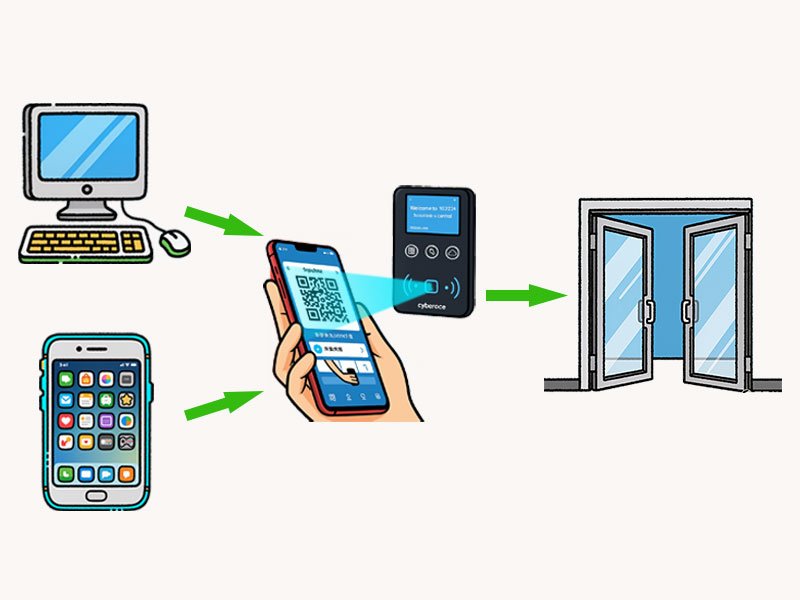
Although the access control management of overseas university laboratories has matured, with more and more universities transitioning to digital management, QR code access control technology with its characteristics of"open interface", "phone as key", "decentralization", "air authorization", "anti duplication" , the overseas system integrators and software platform vendors provides new solutions and ideas for the renovation of university laboratory access control. It is not only a simple access control upgrade, but also a revolution in laboratory access control management concepts.
For system integrators and software platform providers with development capabilities, we provide customization hardware services (IPX7 waterproof, wide temperature range -20 ℃~60 ℃, wide voltage range 6-25V) to help upgrade the laboratory market. If you also have similar needs, please search for "cyberoce".
